Abstract
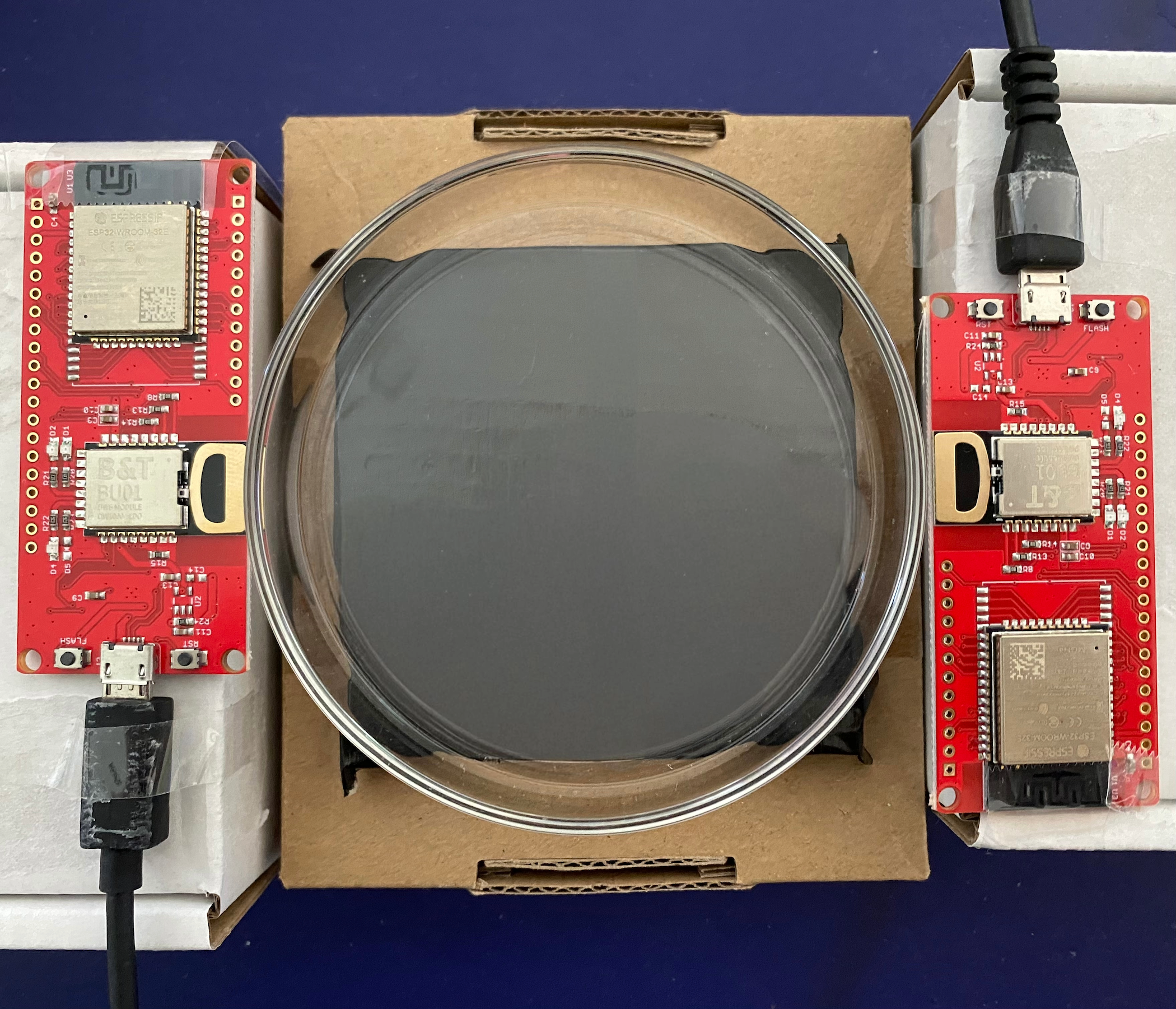
With a growing rise in urbanization, there is an inevitable need to create sustainable digital networks for management of natural resources in developing smart cities, due to the increased value of such resources with population growth and development. One such necessary resource is water, and management of water consumption is important to the welfare of society. Previous studies have focused on invasive methods of water quality monitoring, which can be inefficient, not continuous, or pose other hazards. Noninvasive (without contact) water quality monitoring is crucial for preserving sample integrity, enhancing safety, and enabling continuous, real-time assessments. This paper presents a method using a bistatic Ultra-Wideband (UWB) radar to noninvasively predict salinity and total dissolved solids (TDS), which are key water quality parameters, of a sample. By processing the UWB signal's time of flight (ToF) and received signal strength indicator (RSSI), and applying the Kalman filter for additional feature generation, then training a Random Forest Regressor model for prediction based on simulated UWB signal data, accurate calculations of water quality are achieved. With overall R-squared values of 0.906 for salinity and 0.907 for TDS, and low root mean square errors and mean absolute errors, this approach offers a reliable and efficient alternative to traditional invasive methods, with broad implications for environmental monitoring and public health.
Correlations Plot of Signal and Water Data
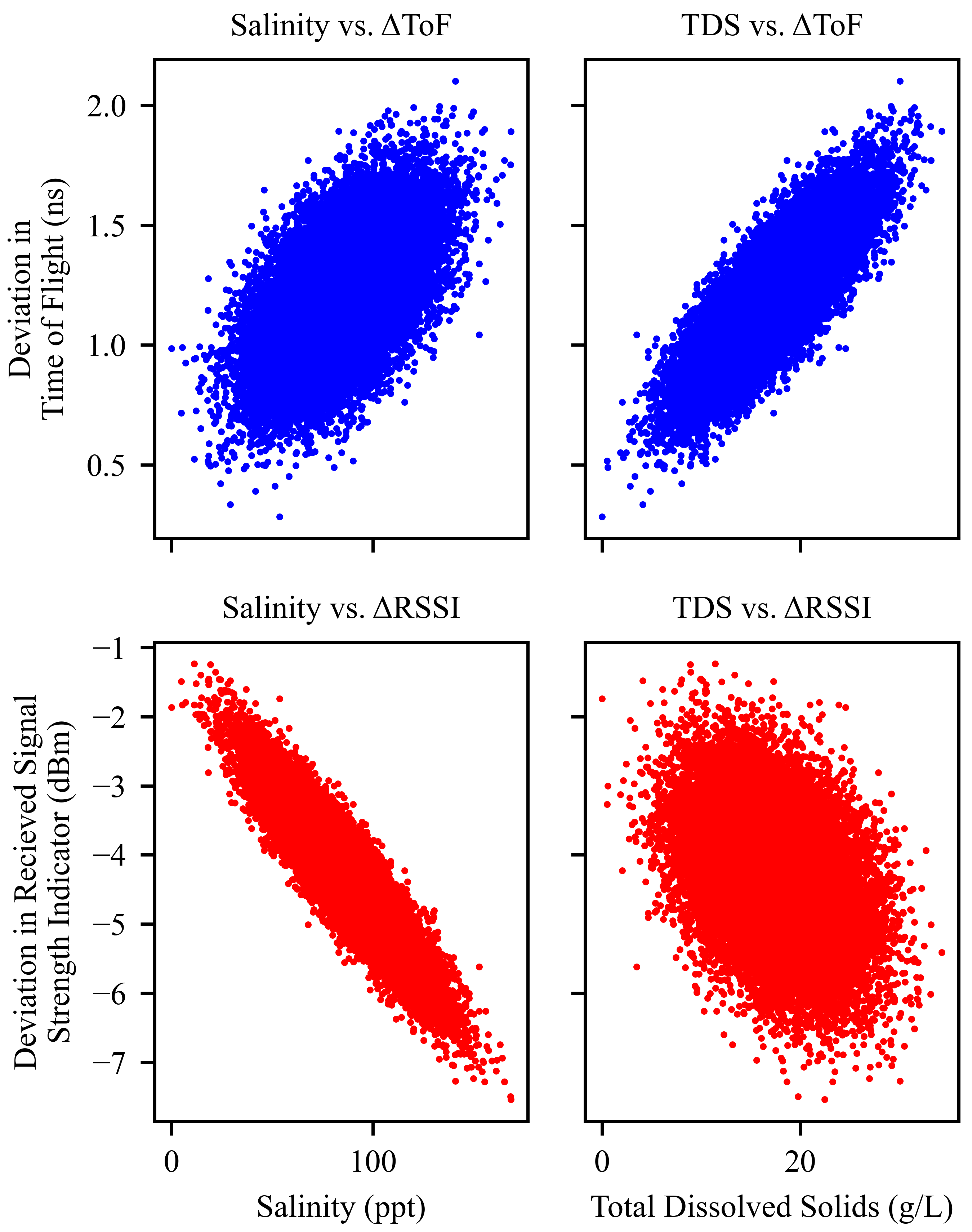
Scatter plots showing the relationship between water quality parameters and signal metrics. Time-of-flight increases with salinity and dissolved solids, while signal strength decreases.
Simulated Signal Data
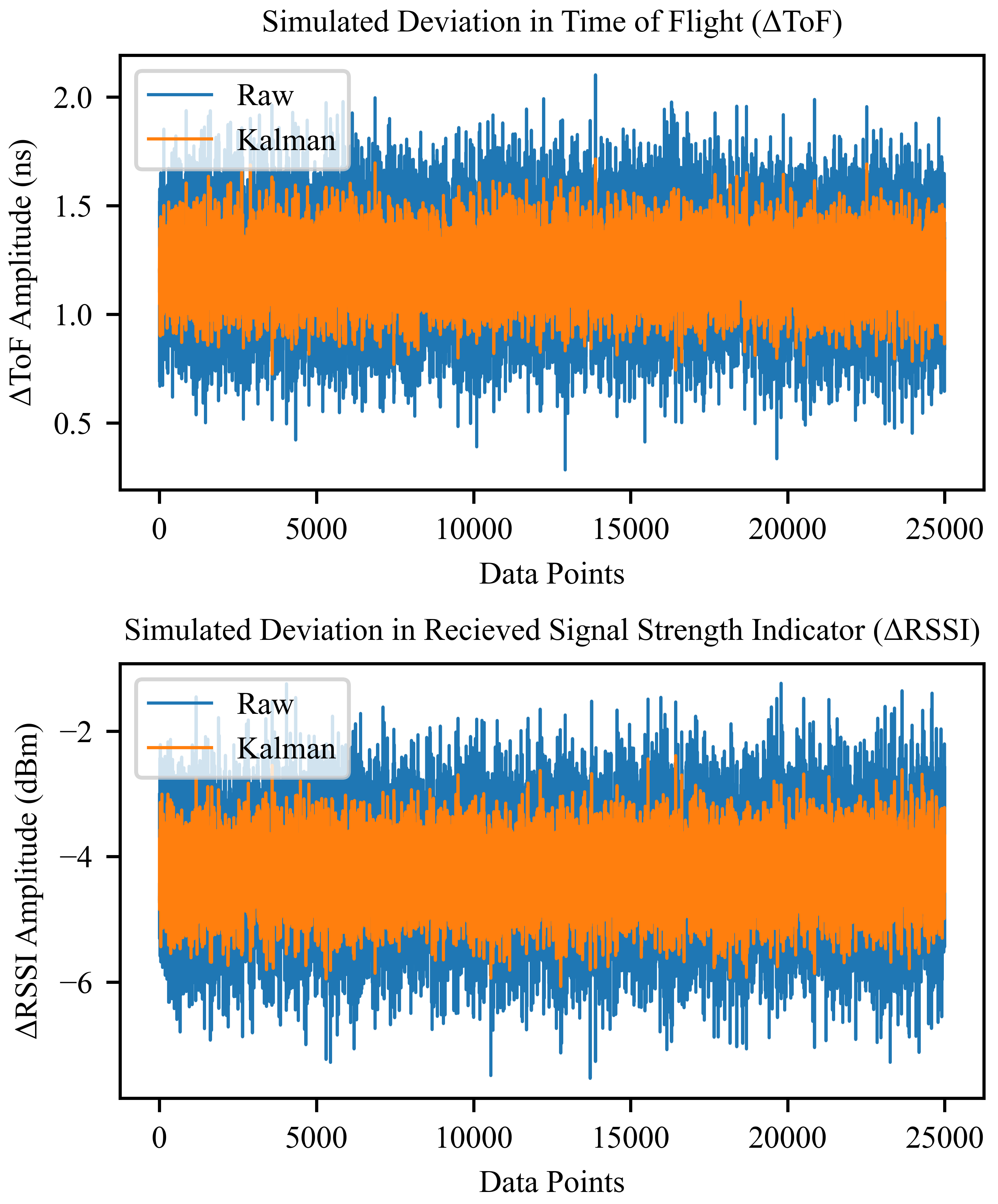
Signals are simulated from a Ridge Regression model that evaluates likely signal strength and time based on preexisting water quality conditions. A Kalman filter is applied to improve input signal quality for water quality prediction.
Results Evaluation
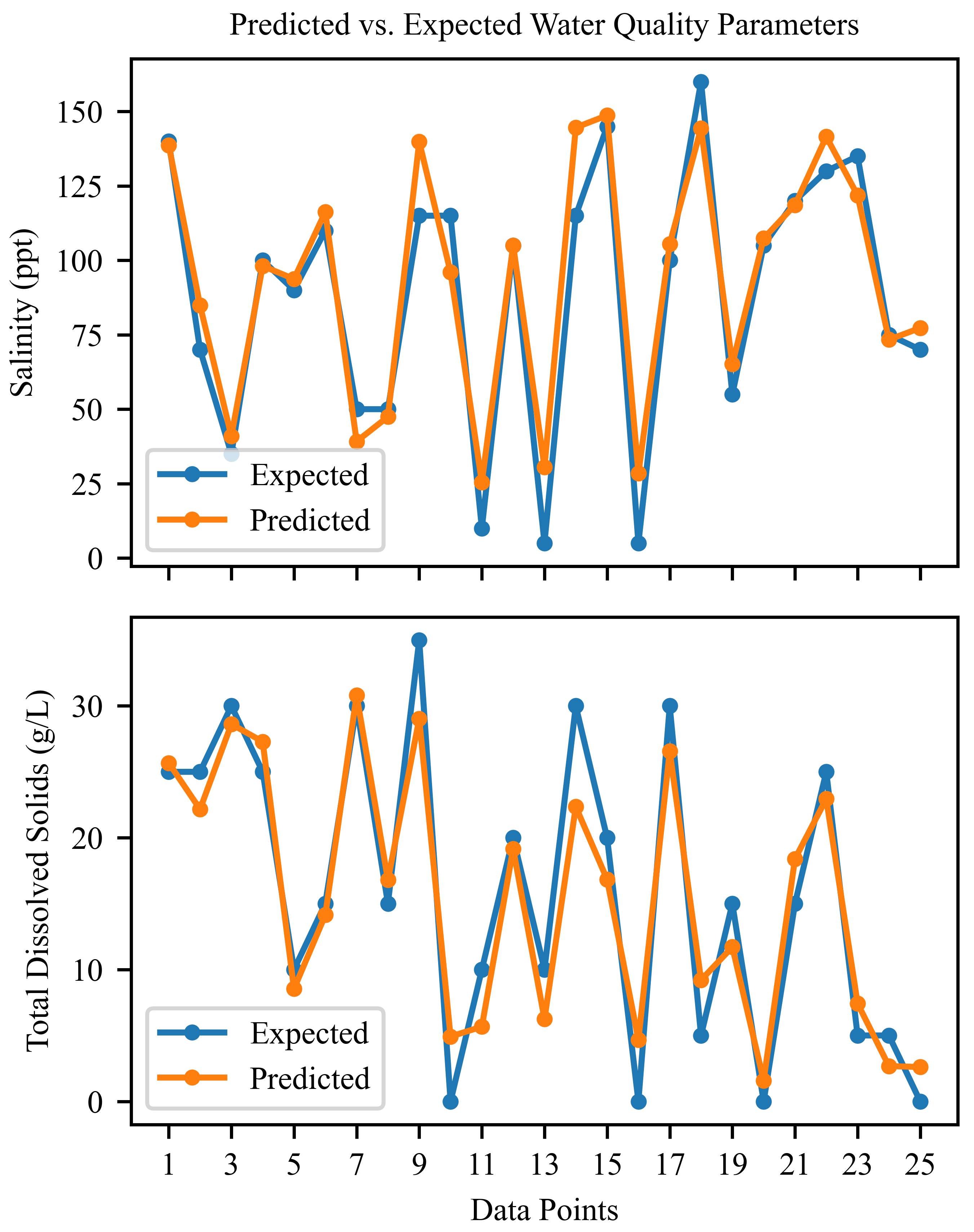
Comparison between model-predicted and measured values for salinity and dissolved solids across 25 data points. High accuracy of approximately 90% is achieved with the Random Forest Regressor.